
Azevedo et al (2010) set out to explore the concept of self-regulated learning when it comes to what they call “hypermedia environments” (p. 210). The authors define self-regulated learning (SRL) as “an active, constructive process whereby students set goals for their learning and then attempt to monitor, regulate, and control their cognition, motivation, and behavior, guided and constrained by their goals and the contextual features in the environment” (p. 210).

Obviously, SRL takes on a different connotation in an online environment for various reasons. In online environments, cognitive load can be compounded by the variety of options a learner has in regardless to where they place their attention and focus (multiple hyperlinks within a document/site, for example). Additionally, most of the time, an online learner is in a remote location, working independently and seeking out information based on some sort of instrinsic motivation, without guidance of what they “should” be learning.
During the COVID-19 pandemic, all lines of distinction for this topic were blurred as students were forced online and forced into a sort of hybrid SRL. What impact did this have on learners who are not self-regulated and self-directed? I believe we are only beginning to understand the impact those years had on the learners that are now entering college classrooms (where, incidentally, self-directed/regulated learning is more of an expectation). So, the SRL concept bears further investigation keeping the new post-COVID reality in mind.

SRL, in general, reminds me of my own schooling experience. From Kindergarten to Freshman year, I was enrolled in various A.C.E. schools (Accelerated Christian Education). Regardless of one’s opinion about the separation of church and education, it was a perfect example of an SRL educational model.
Students worked in a large “learning center” with uniformed “monitors” and “supervisors”principals. We were each given grade-level 40-page workbooks and small cubicles to work independently on daily goals, usually reading and then 4-5 pages in each of the various subjects. Every few pages, students were alerted they needed to score their work and would need to request permission from a monitor to visit the “scoring station” stocked with answer keys. If work was incorrect, students would mark it so, return to their desks, and then correct the work before once again visiting the scoring station to ensure the work was now complete before moving on to the next scaffolded assignment.
At the end of each subject workbook, students would take a practice test and then official test before moving on to the next workbook in the series. Grades and subsequent stars/Congratulations Slips presented in front of the entire opening assembly were given, depending on the grades earned. Grades earned were also used to earn “privileges” such as extra recess time and free time when one completed one’s daily goals.
For students like myself, the rigor and these motivational ‘carrots’ (motivation being another aspect of SRL) fueled my independent work ethic, and I thrived in this system, often getting far ahead of my peers in work levels and workbook completion. I wanted the shiny stars of achievement to hang up in my cubicle, I wanted the public recognition, and I wanted to earn the privileges that went along with that. Aside from that, much like now, I love learning…so I dove in with enthusiasm.
Other students did not fare so well in this system and often fell far behind as goals from previous days went unmet. Indeed, research now shows that not all students thrive in a self-directed model of education for various reasons that are no fault of their own. In fact, Azevedo et al (2010) cite examples of cognitive, motivational, and behavioral aspects when it comes to students that may factor into the models of education in which they succeed or struggle.
Thinking of these facts in relation to a SRL necessity during COVID-19, it is no wonder that some students preferred the new system and are now eager for more of the same in a post-COVID world. Other students in my Higher Education classes shudder at the thought of remote and independent work and are constantly asking for clarification and explanation, even when instructions for homework are clearly laid out.
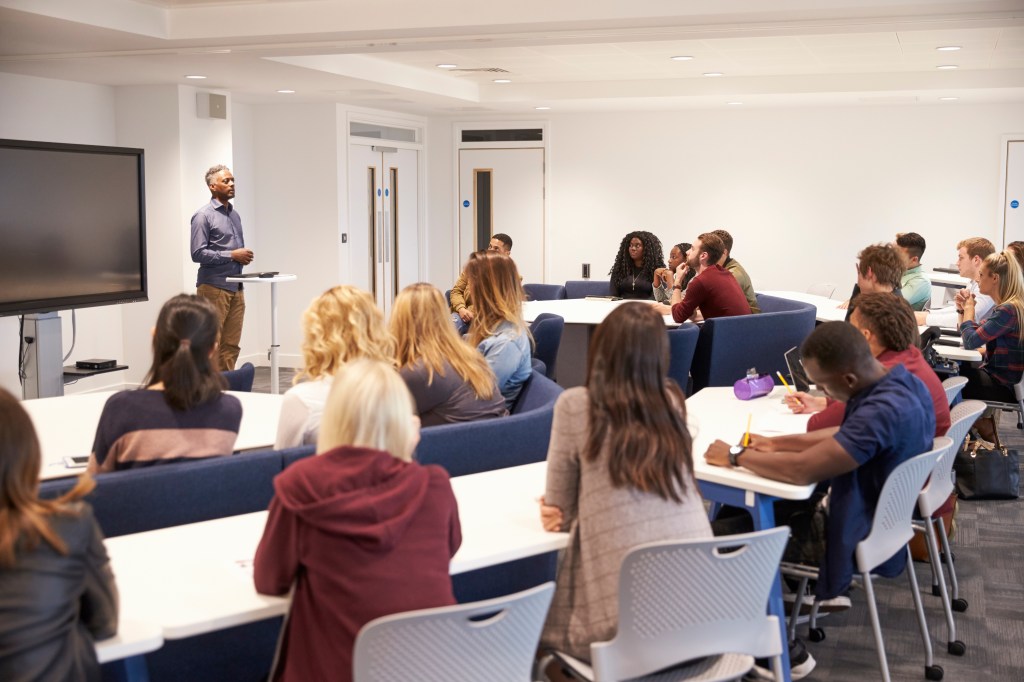
Regardless, we can all agree that more research on SRL would be fascinating.
Azevedo et al (2010) explore some studies that have approached SRL as an ‘aptitude’ rather than an educational ‘event’ (p. 212). In other words, these studies examine SRL as “a relatively enduring trait that can be used to predict future behavior” (p. 212). The possibilities they mention—including online tracing methods like keystroke analysis and eye tracking—are a tantalizing glimpse into understanding how students may function in a SRL environment.
However, they also warn that educators should examine the potential weaknesses of these studies and take into account student “internal conditions (e.g., a learner’s internal standards used to assess the quality of information processing), learner characteristics (e.g., prior knowledge), and contextual conditions (e.g., access to a pedagogical agent that provides feedback, access to additional informational resources needed to complete the task, time constraints)” (Azevedo et al, 2010, p. 217).
Overall, the authors (Azevedo et al, 2010) really don’t draw any major conclusions on the subject in their article. Instead, they present potential challenges and the invitation to learn more.
I decided to do just that. See you in part 2 of this week’s blog for a deeper dive into SRL!
Azevedo, R., Moos, D., Witherspoon, A., & Chauncey, A. (2010). Measuring cognitive and metacognitive regulatory processes used during hypermedia learning: Issues and challenges. Educational Psychologist, 45, 210-22.

 Now What? (Education and Technology in a Post COVID World)
Leave a reply to Jo Adams Cancel reply